
Nature Notes
Spring Equinox
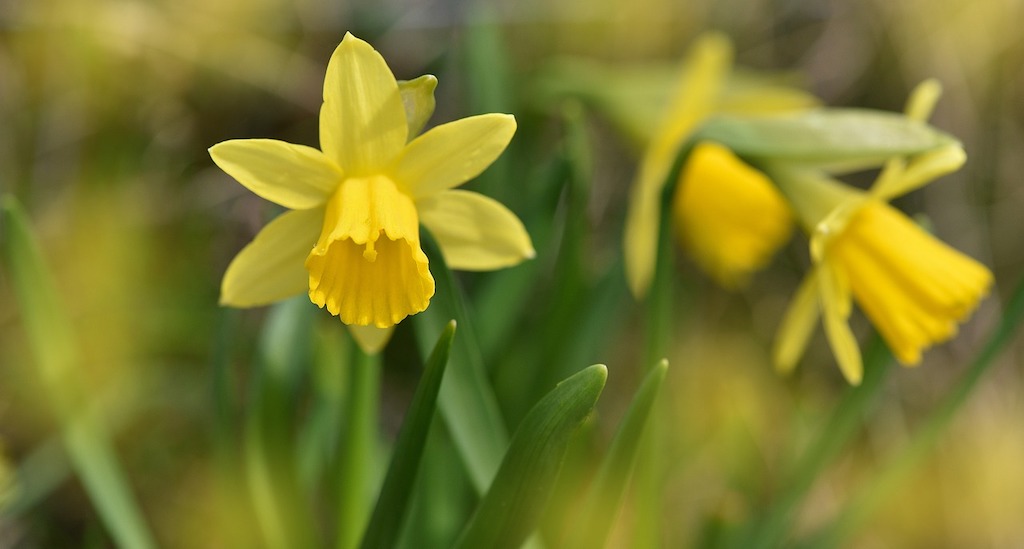
Spring Equinox is here, and it is time to ponder the miraculous power of regeneration. Persephone has returned to the upper world and life has re-awakened. Buds are swelling, birds are singing, and flowers are bursting forth. There is joy and exuberance – despite the suffering and sorrow we must witness daily.
At the Spring Equinox, light and dark are hanging in the balance. But from now on, with every passing day, the sun gathers strength. Mother Earth, violated and scarred by war, yet again, still dons her spring garment and slowly turns the land lush and green.
Spring Equinox – Focus on what matters most
The garden is calling, and the soil is eager to receive the seeds. Are you tending a garden? What will you be growing this season?
The garden can be a physical space or a metaphorical one. The inner world is also a garden that needs attentive care, weeding, pruning and nurturing.
In the home, it is time to clear out the winter dust. Spring cleaning, painting, and decorating are on the agenda.
It is also time for inner cleansing. Nurture the spirit and the body by boosting your energy and vital spirit with fresh vitamins and nutrients of early spring herbs. When the body is strong, so is the mind!
Spring Equinox – Celebrate life
Get ready for the season, invite the sunshine in and make the most of these fleeting joys! Life becomes infinitely rich when we walk mindfully and celebrate each flower or butterfly.
Focus on what matters to you and make your intentions clear. Life is precious and short. The power to make your garden flourish lies in your hands. Use it.
The Spring Equinox is a time of new beginnings. Let’s celebrate the mysteries of rejuvenation and eternal return.
Welcome to the Sacred Earth website!

Hi there! Thanks for stopping by! My name is Kat Morgenstern, and I am delighted that you have found your way here!
I have created the Sacred Earth website as a forum for nature lovers of all stripes. Come and join me on a journey down the garden path, and off into the virtual woods, where we will explore, learn and discover all about the intertwining roots of nature and culture.
Are you interested in Astrology?
We are living in turbulent times. If you have ever wondered what is going on with the planets these days, check out Astro-Insights.com for current astrology updates and planetary insights. or contact info@astro-insights.com for a personal astrological counseling session.

Current issue
Gardening Jobs for March
Gardening Jobs in March
March is ‘busy season’. As soon as the sun comes out, and it’s warm (and dry) enough to be outside, every gardener itches to get their hands into the dirt again. But where to start?
Preparing the vegetable beds
Once the ground has thawed and dried off a bit, it’s time to get going with the preparations:
1) It is a good idea to get rid of the weeds early on (especially the perennial or biennial ones). They will be half the trouble later on.
2) If you haven’t done it yet, start tidying up the garden: dead-heading old flower heads and clearing everything that has died off. But, remember that butterfly larvae overwinter on old nettles and such. Nettles support some 40 species of insects and butterflies!
If fresh, you already have young nettles coming up, make the most of this wonderful early wild vegetable. Consider leaving some standing year-round for the wildlife, if you have a spot where they are not in the way.
3) Work in plenty of good, home-grown compost into the vegetable plots and prepare the soil to get a fine crumb. This will make it a lot easier for your seedlings to break through the crust.
What to sow in March?
Your sowing schedule largely depends on your growing zone and whether you have a suitable space to start seedlings indoors. If you live in a mild climate, you can sow some hardier, early varieties out in the open, as early as March. But frost-sensitive plants, like tomatoes, should be started indoors. Lettuce and radishes do well in a cold frame. The shorter your growing season, the earlier you need to start your seeds indoors on the windowsill. That way, they will get a head start, which prolongs the growing season. By the time there is no more danger of late ground frosts, they will have developed into little plants that are more resilient by the time you plant them out.
Indoors or under glass
You can sow fennel, broccoli, kohlrabi, cabbage (early varieties), Savoy cabbage, Malabar spinach (late March), New Zealand spinach, carrots, autumn leeks, and celery either in the cold frame or indoors. Warmth-loving plants, like tomatoes, zucchini, aubergines and chillies, fennel, and bell pepper, do best when started indoors in an environment of about 20°C.
On sunny days, don’t forget to open the cold frame to give your seedlings some air – otherwise, they will get baked under the glass.
Most importantly, make sure your seedlings never dry, after sowing them. Water is life – they cannot grow without it.
Outdoors
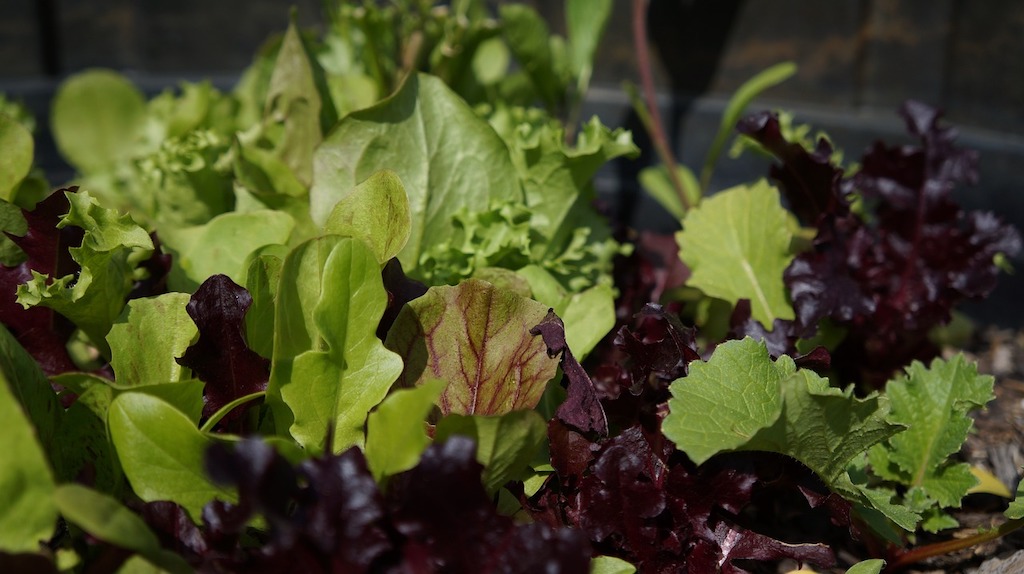
Onion sets can be planted out in March. Beetroots, Swiss chard, lettuce, (also Asian lettuce, peas, rocket, radishes, and nasturtiums are all hardy enough to be sown directly into your well-prepared veggie plots.
Check out SeedsNow for your organic gardening supplies!
#Ads
Disclosure: I earn a small commission from affiliate links to help support the site.
Plant Profile:
Star of Bethlehem
Plant Profile: Star of Bethlehem (Ornithogalum umbellatum)
Family: Liliacae /allium family
I recently took up nature journaling, and when I sat in the garden looking for a suitable motif, I suddenly noticed a Star of Bethlehem growing at my feet. I had seen them in the vineyards many times, but hadn’t noticed them moving in with me.
Apart from giving them a friendly nod, I had never paid much attention to them. As far as I knew, they were not used for food or medicine; but hang on – didn’t Dr Bach revere this little flower and give it a prime spot as part of his Rescue Remedy formula?
I decided to take a closer look and dropped to my knees to study it in detail. I was immediately smitten by the Star’s sublime beauty and unusual features.
What is the Star of Bethlehem?
Star of Bethlehem is a small perennial bulbous plant of the Lily family (Asparagaceae). Its leaves die back even as it begins to flower. After flowering, its energy retreats into the underground bulb. During the ‘dormant’ period, it produces little bulbils that send up their own narrow leaves early in the following spring. The Star of Bethlehem is thermoperiodic, meaning that it needs to go through a period of low temperatures before it begins to flower.
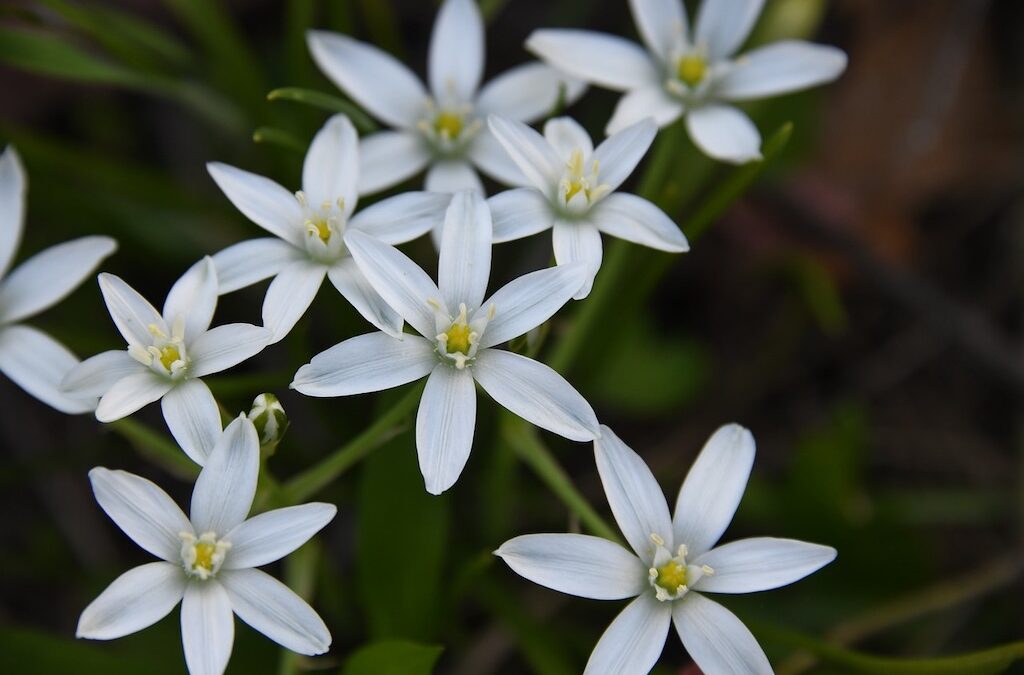
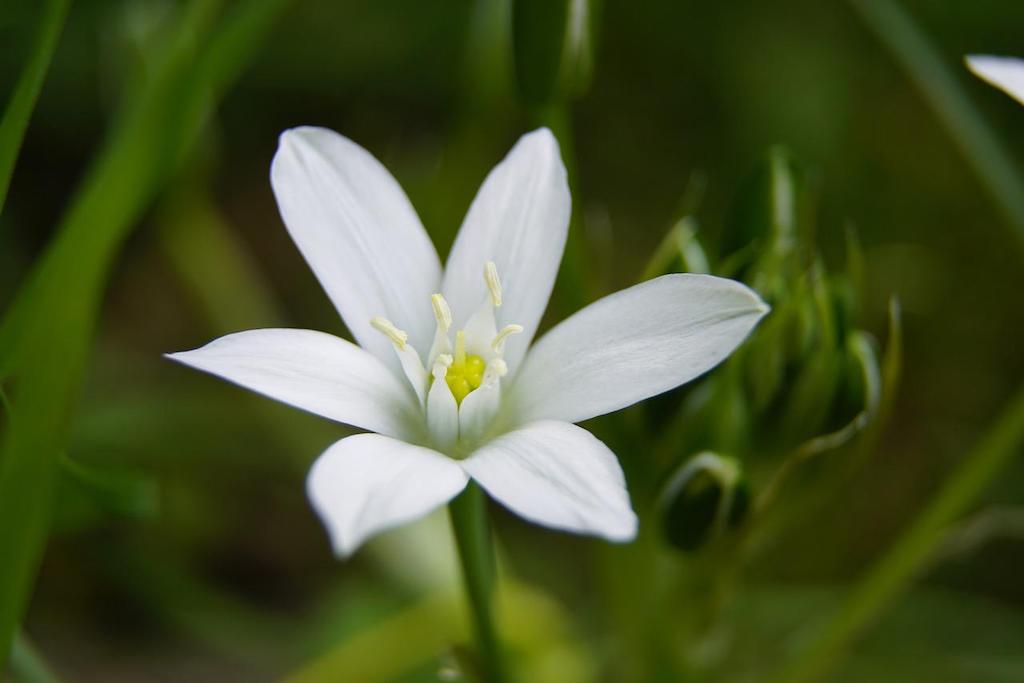
The pretty, star-like flowers appear between April and June. The white petals have a green stripe on the underside that is only visible when the flower is closed. It looks as if the petal has fused with the sepal. But in fact, botanical descriptions of the plant say that the flower is composed of three identical sepals and petals, displayed in a single whorl. It is impossible to tell the difference, so botanists call them tepals. In the centre of the flower is a little crown of what looks like six white petals tipped by the pollen-bearing anthers. They enclose what looks like a little six-pointed star, from which the pistil protrudes.
Where does Star of Bethlehem grow?
You can find Star of Bethlehem growing in many places throughout Europe and North Africa. It arrived in the United States as a garden plant, which has naturalized to such an extent that the USDA now considers it a pesky weed.
Where did the name ‘Star of Bethlehem’ come from?
The origin of the name is attributed to various stories. The most obvious explanation is its widespread distribution in the Middle East and the Mediterranean Basin. Pilgrims on their way to Jerusalem carried the dried bulbs as food. (But fresh bulbs are reported as poisonous to cattle.) Another myth claims that the flower sprung from fragments of the Star of Bethlehem.
Is Star of Bethlehem known by any other names?
Indeed, it is, but none as charming. Star of Bethlehem is also known as Sleepy Dick, Nap-at-Noon, and even ‘Dove Dung’.
Nap-at-Noon alludes to the flower’s habit of ‘going to sleep’ in the afternoon and on cloudy days. The name ‘Dove Dung’ seems a bit insulting, apparently implying that the white ‘splash’ of the Star resembles bird doo-doo. It doesn’t, and in fact, it is not a reference to the supposed likeness. Instead, the name is a literal translation of the Latin name Ornithogalum, which means ‘bird’s milk’, a common euphemism for avian excrement. The species name ‘umbellatum’ refers to the umbel-like flower.
History
Gerard describes it as a type of wild onion and quotes Dioscurides, who mentioned that the bulbs are edible. Both the bulbs and the green parts are sold at markets in Turkey (Central, Bulancak) (1). Yet, they are also many sources that claim it is poisonous. So, what is the scoop?
Is Star of Bethlehem poisonous?
Biochemical research confirms that Star of Bethlehem contains cardioactive glycosides that are potentially toxic. But further investigation showed, that they do not survive being subjected to digestive juices, which would explain the controversy. An early study published by Arthur Vogelsang in 1961 notes that the effect of Star of Bethlehem is quite different depending on whether it is taken orally or injected. To test his hypothesis and confirm that the coating prevents the breakdown of the cardio-active compounds in the stomach. He compared Star of Bethlehem with Digitoxin and observed that its extract slowed the heart rate to a lesser degree than digitoxin while increasing the strength of the cardiac contraction and the excretion of body fluid. Star of Bethlehem also caused less nausea. Overall, Star of Bethlehem is a gentle yet highly effective heart drug that can be given to reduce blood pressure, strengthen the pulse and increase the discharge of excess fluid. It is particularly helpful for patients that do not tolerate digitoxin well.
Note of Caution:
The specific growing conditions, such as exposure to sunlight, water and soil type, change Star of Bethlehem’s chemical composition.
Is Star of Bethlehem used homeopathically?
In Homeopathy, the Star of Bethlehem is known by its Latin name, Ornithogalum umbellatum. It is used to treat persistent gastrointestinal problems, such as upper abdominal pain in the epigastric (central abdominal) region, pressure, malignant tumours of the digestive tract accompanied by depression, and feeling drained and exhausted. It is also indicated for patients suffering from a state of nervous exhaustion with high sensitivity to all types of stimuli.
What are the indications for Star of Bethlehem Bach Flower Remedy?
For Dr Bach, Star of Bethlehem was one of the most treasured flower remedies. He used it as a go-to Trauma remedy to buffer the effects of shock, such as unexpected bad news, the sudden loss of a loved one, an accident or other traumatic event. It can also help when facing the pain of past traumata (PTSD). It is one of the essential components of Rescue Remedy.
More articles:
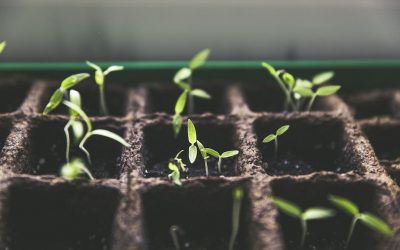
Gardening Jobs in February
Even as early as February, there are things you can do to kick off the gardening season and get a nice head start.
What is Foraging?
What is foraging, why do people forage, what are wild edible plants and what skills do foragers need to learn?
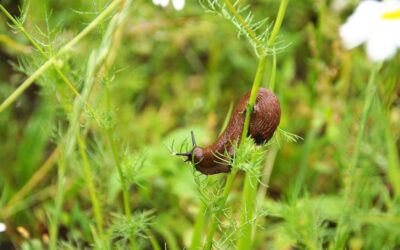
Slugs
Slugs may not be pretty or cute, but they do play their part in nature, and they are a lot more interesting than I ever thought!
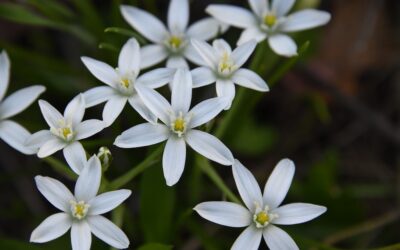
Star of Bethlehem
The Star of Bethlehem is a small bulbous flower of the Lily family with many unusual features and interesting properties.
Foraging Daisy (Bellis perennis)
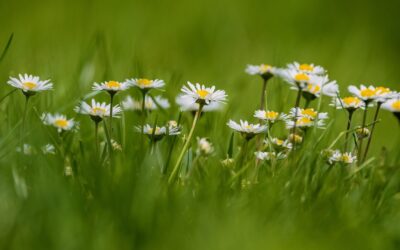
Daisies are among the most common spring herbs, but did you know they are edible? This article is about foraging Daisies, and how to use them
Gardening Jobs in May
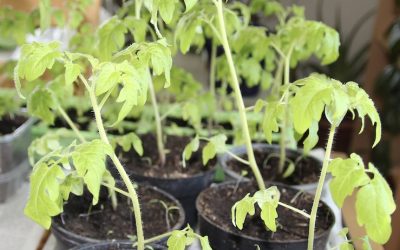
What gardening jobs are there to do in May? Actually, there are plenty. May is one of the busiest gardening months. Sowing, planting, weeding, maintenance and more – there is plenty to do.
Gardening Jobs in April
The main gardening jobs in April are going to be planting, sowing, and weeding. Hopefully, all your plots are ready to go.
Cacao can do more – New Uses for an Old Crop
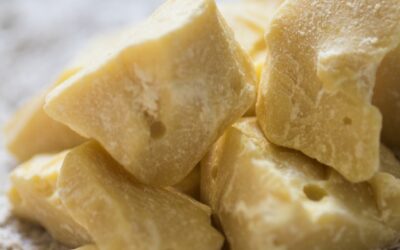
This article is about unknown uses of Theobroma cacao. This remarkable tree can offer even more than chocolate – as if that wasn’t enough.
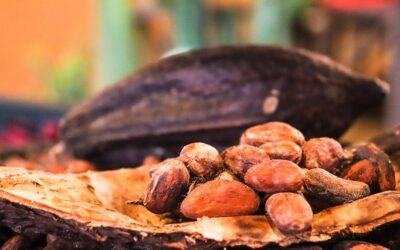
12 amazing superfood properties of Cacao
This article is about the amazing nutritional superfood benefits of Cacao and high Cacao content chocolate.
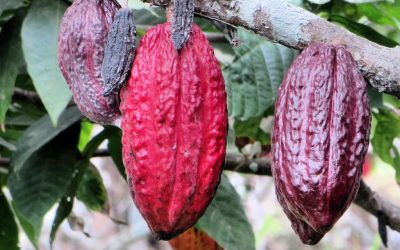
History of the Cocoa Tree- Theobroma cacao
This article is a short introduction to one of my favourite plants: Cocoa – Theobroma cacao, the food of the gods.
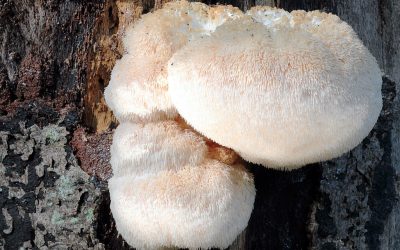
Ever heard of Lion’s Mane Mushrooms?
I never heard of Lion’s Mane mushroom until I found one in the woods. I am so glad it came into my life – and changed it for good!

How to Plan a Garden – the basics
Growing a garden starts with knowing your environment and creating a map that fits the territory. There are a few basic perimeters.